Smart Factory

4 Trends Shaping the Future of Manual Assembly

Manual assembly will remain a central component of production in the coming years. At the same time, a shortage of skilled workers, increasing digitalization and new technologies are fundamentally changing the requirements for assembly workstations.

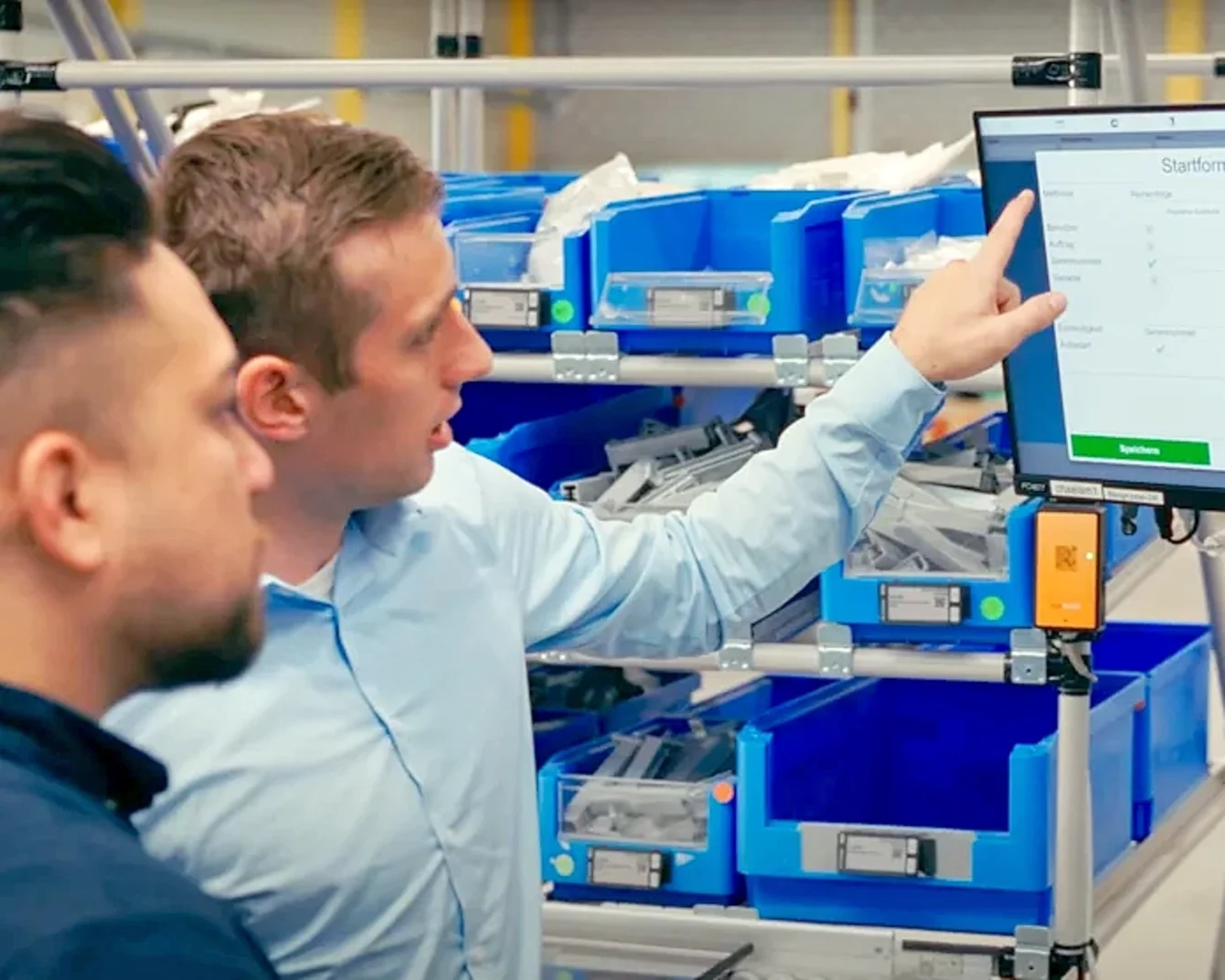
Two men at a Smart Factory Assembly Station at Dangel

Why the Focus Remains on Manual Assembly

Many manufacturing companies are facing a similar situation:

  • The shortage of skilled workers is increasing.
  • Experienced employees are retiring.
  • Variety and complexity are growing.
  • Customers expect shorter delivery times.
  • The pressure on productivity and quality is growing.

At the same time, it is clear that not every assembly process can be automated in a cost-effective manner.

Especially in high-mix-low-volume (HMLV) environments, with batch sizes of 1, prototypes, or frequently changing variants, humans remain a decisive success factor. The question is therefore not whether manual assembly will disappear – but rather how it will continue to develop.

Two men walking in a factory hall with white cars in the background.

What We Observe with Our Customers

The challenges in manual assembly differ from company to company. Nevertheless, similar questions arise again and again in discussions with production managers, industrial engineers and process specialists:

What role does artificial intelligence play in assembly? How can empirical knowledge be preserved? Which technologies support employees in the workplace? And how can assembly processes remain efficient despite growing complexity?

Based on these developments, we have identified four trends that will shape manual assembly in the coming years.
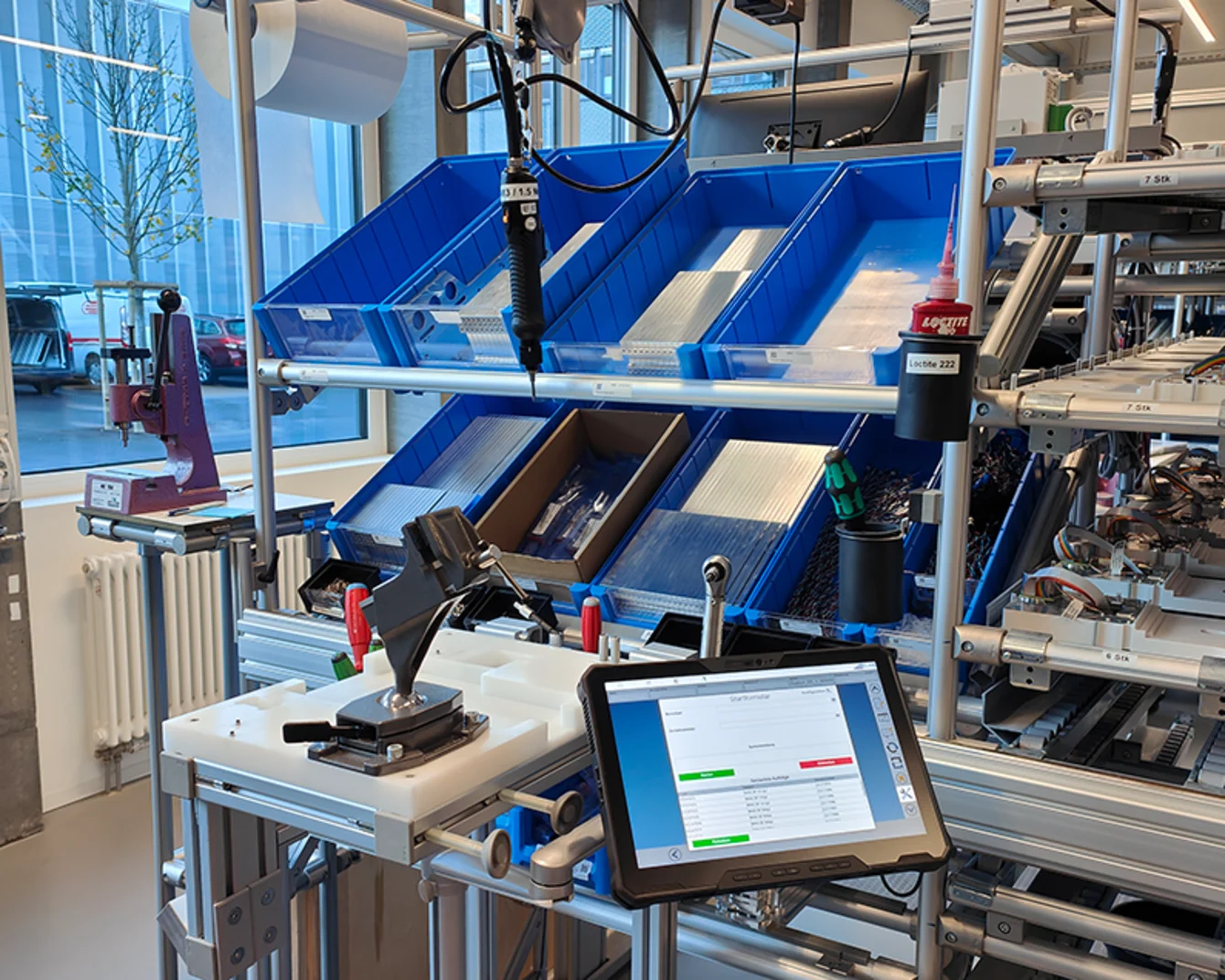
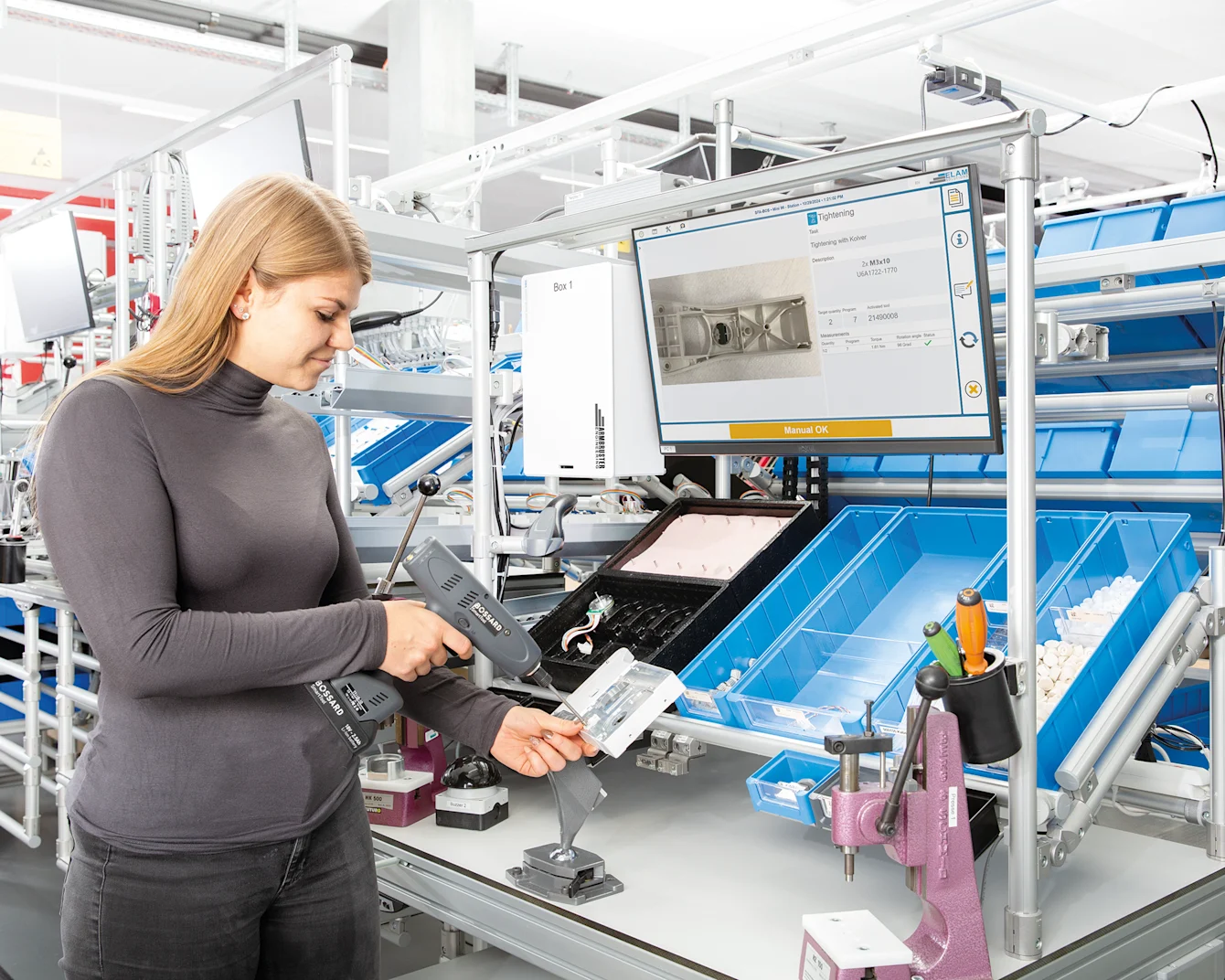
Smart Factory Assembly mounting system - Tablet with digital assembly instructions and intelligent screwdriver

Trend 1: Demographic Change and a Shortage of Skilled Workers

Industrial manufacturing is undergoing a profound demographic change. Experienced employees are leaving the company, while at the same time less qualified specialists are moving up. As a result, valuable experience is lost, which is often not documented.

This creates new challenges for companies:

  • Preserving knowledge and making it accessible
  • Onboarding new employees faster
  • Reducing language barriers
  • Ensuring productivity despite staff shortages
  • Creating ergonomic workplaces

The ability to make knowledge digitally available and to quickly train new employees is becoming a competitive advantage.

Woman with a Smart Tool guided with ELAM Solutions Work Instructions through process.

Trend 2: People Back at the Center

While Industry 4.0 focused heavily on automation and networking, Industry 5.0 is shifting the focus back on people. The mantra is "man AND machine", not "man OR machine".

Modern technologies are intended to support, relieve and empower employees. As a result, the following topics will gain importance:

  • Ergonomics
  • Safety
  • Health
  • Employee satisfaction
  • Work-based learning

This approach is particularly relevant in manual assembly. In the future, companies will not only be evaluated according to productivity, but also according to how attractive and supportive their workplaces are designed.

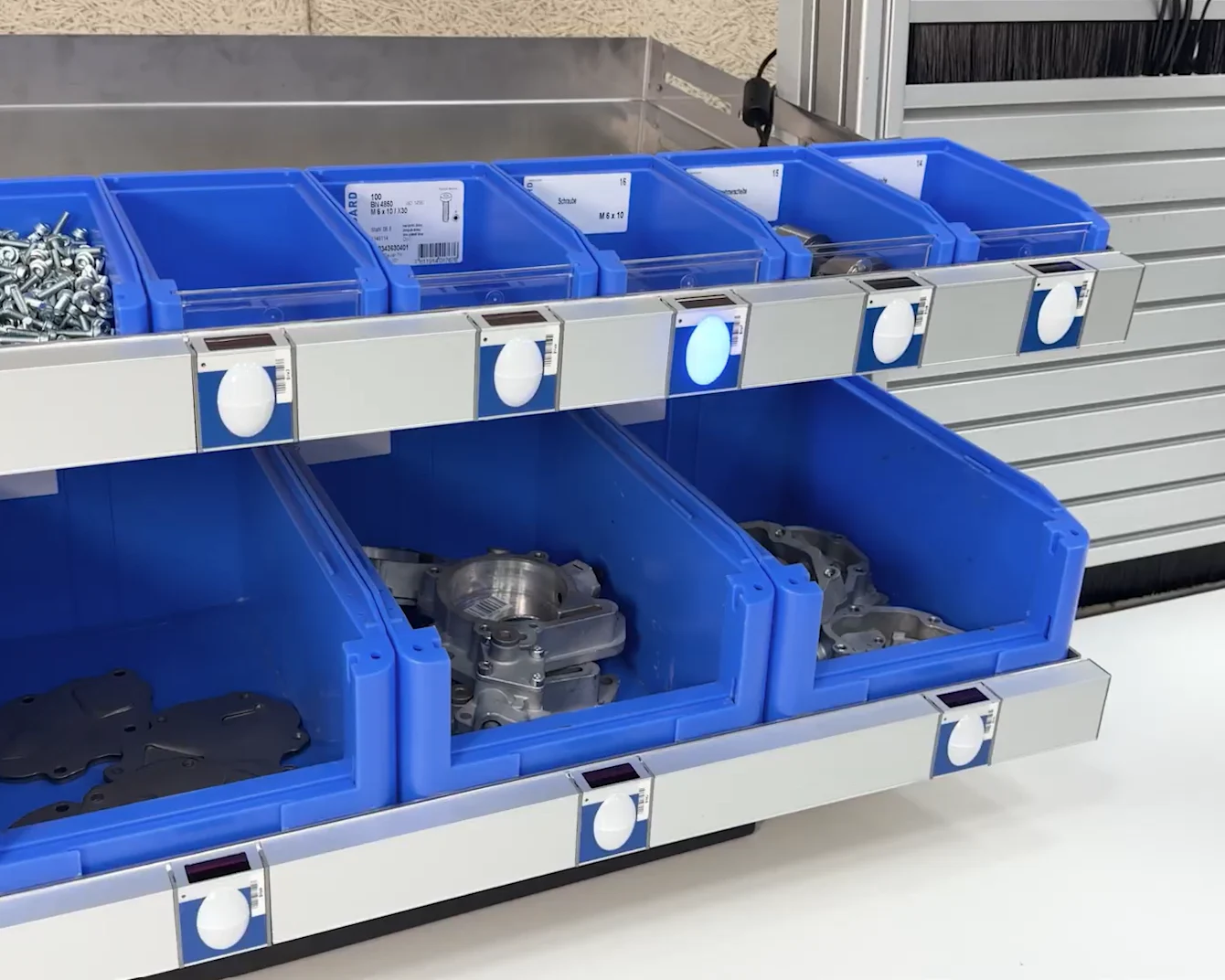
Bossard Pick-to-Light system with blue bins at a workstation in the assembly area

Trend 3: Digital Assistance Systems Are Becoming the Standard

The biggest technological changes will take place directly at the assembly workstation. Paper-based work instructions are replaced by:

  • Digital worker guidance
  • AI-supported assistance systems
  • Computer vision
  • Smart tools
  • Real-time data feeds
  • Cobots
  • Networked sensor technology

As a result, manual assembly is evolving from isolated workstations to a digitally networked system.

What Does This Mean in Concrete Terms?

Digital work instructions guide employees step by step through the process.

Computer vision can detect errors before they occur. AI systems help to:

  • find information faster
  • make knowledge available
  • shorten training times as well as decision-making.

This does not replace humans, but provides digital support for more complex tasks.

Two men at a screen point to the elam solutions shown

Trend 4: Resilient and Adaptive Production Systems

The past few years have shown how global crises, supply chain problems and market changes can affect manufacturing companies. At the same time, the variety of variants, customer requirements, product changes and innovation cycles are steadily increasing.

As a result, rigid assembly systems are reaching their limits. What will be in demand instead in the future:

  • Flexible assembly workstations
  • Modular processes
  • Quick changeover possibilities
  • Data-based optimization
  • End-to-end transparency

Companies must be able to adapt their production to new conditions more quickly without missing out on quality or productivity.

What Does the Assembly Process of the Future Look Like?

The most likely vision of the future combines digital assistance with a human-centered work organization. Manual assembly is here to stay – but it will become smarter, more connected and more data-driven.

Assembly of the Future

Digital Guidance

and AI will support operators.

Assembly of the Future

AI-powered assistance systems and digital work instructions will guide operators through complex assembly tasks, reduce errors and help ensure consistent quality across products, variants and shifts.

Assembly of the Future

Cobots

handle physically demanding tasks.

Assembly of the Future

Collaborative robots take over repetitive, heavy or ergonomically challenging activities, allowing employees to focus on tasks that require flexibility, judgement and problem-solving capabilities.

Assembly of the Future

Knowledge

becomes digitally available.

Assembly of the Future

Critical assembly knowledge is documented and made accessible through digital platforms, reducing dependency on individual experts and helping new employees become productive more quickly.

Assembly of the Future

Real-Time Data

drives better decisions.

Assembly of the Future

Assembly data is captured directly at the workplace through connected tools, sensors and software, creating transparency and enabling faster decisions, traceability and continuous improvement.

What Companies Can Do Today to Future-Proof Their Assembly

Manufacturing companies do not have to wait for the factory of the future. Many measures can already be implemented today. We recommend you start with the following steps:

1. Establish Digital Assistance Systems

Digital work instructions, smart tools and real-time data quickly create transparency and reduce errors.

2. Systematically Preserve Knowledge

Expertise should not remain in individual minds, but should be digitally documented and made accessible.

3. Promote Human-Centric Manufacturing

Ergonomics, the ability to learn and employee acceptance must be part of every digitization strategy.

4. Monitor New Technologies

Cobots, computer vision, wearables and AI assistants are developing rapidly and are becoming increasingly economically viable.

5. Involve Employees at an Early Stage

The success of digital solutions depends crucially on their acceptance in everyday work.

Are You Ready for the Future of Manufacturing?

Your organisation can get these benefits in your assembly, too. Our team of experts is ready to guide you through every stage of implementation and our customer support is available whenever you need it.

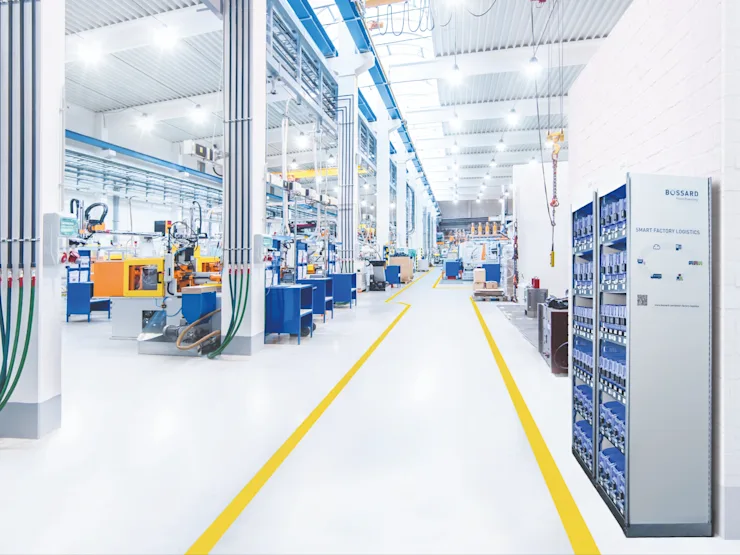
View of a production facility with an SFL rack and work cells

Send Us a Message Here

Please complete the form. *fields are required.