Friction Coefficient Test: Process-reliable assembly of screw connections
Expert Test Services
Friction Coefficient Test - Process-Reliable Assembly of Screw Connections
The screw is a highly effective fastener in manufacturing, though it has its downsides. A friction coefficient test can offset these, maximizing screw connection potential, eliminating unsafe connections and hazards, and avoiding additional costs.
Why is a Friction Coefficient Test Necessary?
Achieving correct screw connections requires the application of a specific tightening torque, influenced by factors such as screw type, property class, surface treatment, and lubrication.
Standard tightening torque tables specify torque values based on friction coefficients, with approximately 80%–85% of torque energy being lost due to friction. Only 15%–20% of this energy effectively generates clamping force, which is critical for the connection’s performance.
Variations in friction coefficient can result, e.g. from deviations in
- Screw Material
- Coatings
- Lubricants
- Surface roughness
- Thread Type
This can potentially lead to insecure connections. Accurate friction coefficient testing is therefore essential to establish a process-reliable tightening torque.
What Practical Benefits Does a Friction Coefficient Test Offer?

Type of Lubrication
Optimizing lubrication reduces and stabilizes friction, ensuring precise torque requirements for screws.

Failure Avoidance
Avoid costly repairs, readjustments, and customer complaints by selecting tightening torques correctly.

Prevent Reputational Damage
Prevent customer dissatisfaction and lost profits resulting from poor manufacturing processes.

Tightening Torque
Accurately determine friction and coefficient range to establish optimal torque for a stable connection.

Process Reliability
Enhance manufacturing process planning for consistent, reliable outcomes.

Application Reliability
Ensure reliable screw connections to establish the foundation for high-quality assembly and products.
Friction Coefficient Test in Bossard’s Test Labs
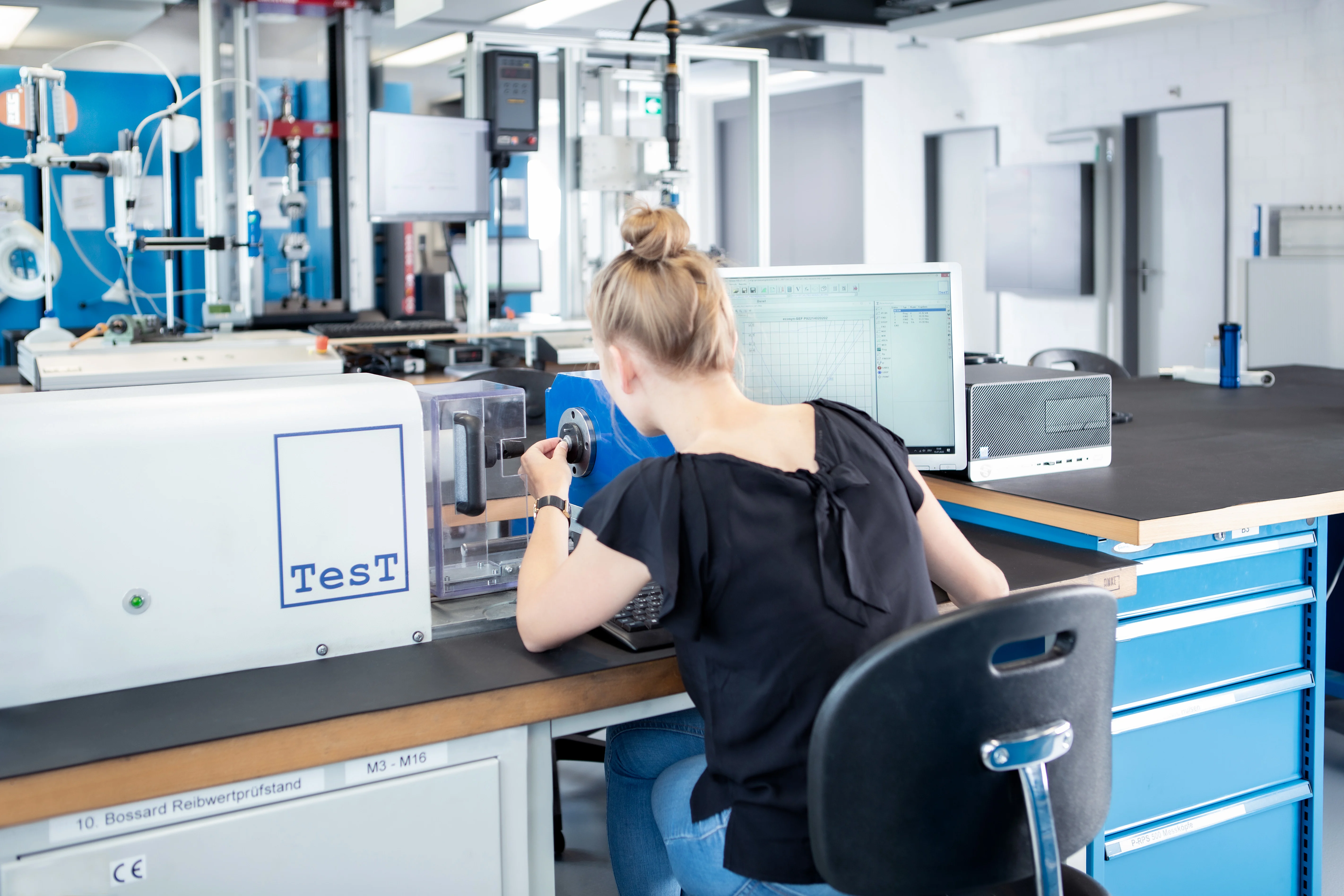
With extensive expertise in fasteners for product development and manufacturing, we conduct precise torque and clamping force measurements in our advanced test laboratories. Our testing capabilities include friction coefficient tests ranging from 0.1 Nm to 4,000 Nm (M3 to M36), achieving preload forces up to 700 kN (70 t).
We also check special applications for screw connections that do not fall under ISO 16047, but meet your specific needs.
Get Access to Bossard's Test Laboratory
As experts in fastening and materials technology, we conduct a wide range of tests in our technical laboratories to support your quality assurance.