E-Kanban and Intelligent Line-Side Supermarket to Optimize C-parts Management
The value of intelligent supply chain management often lies within easily overlooked C-parts. This article illustrates how the kanban system and intelligent line-side supermarket boost inventory turnover and governance efficiency of C-parts.
Challenge: The Invisible Cost of Time
A production line grinds to a halt due to a missing screw. Buyers engage in repeated phone negotiations with suppliers, while warehouse staff scour racks and bins to cross-check stock. Though such a component costs merely a few cents and seems trivial, its stockout and subsequent production downtime trigger hefty capacity losses.
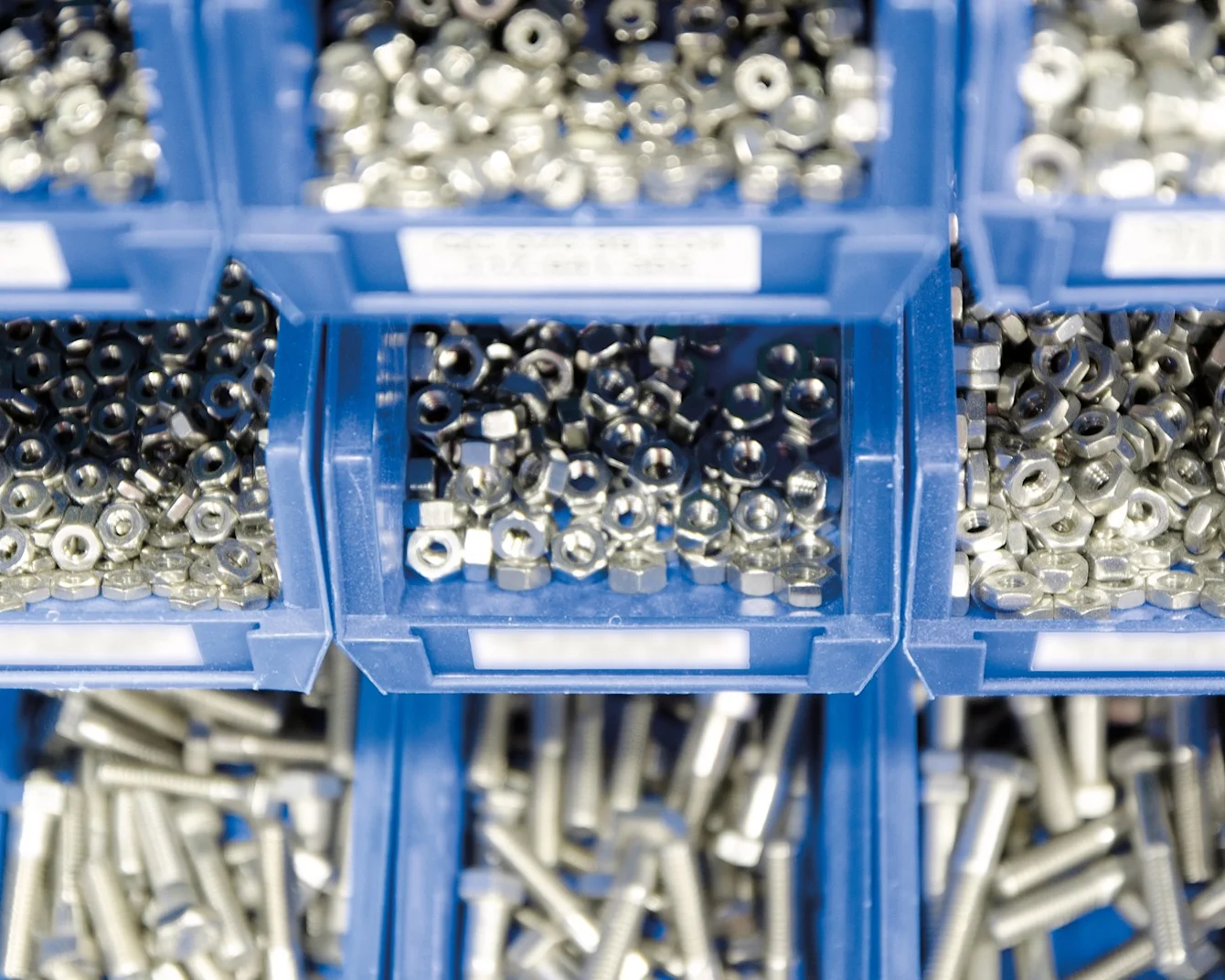
At most manufacturing enterprises, C-parts — low-unit-price, wide-variety, fast-consumption items such as fasteners, sealing rings, gaskets and clips — are undermining factory operational efficiency in an invisible manner.
Inventory Count: Manual counting for thousands of specifications is labor-heavy; inventory mismatches occur frequently.
Stockout Risk: Critical material shortages cause line downtime. Rush purchases double costs; supplier lead times are uncontrollable.
Inventory Cost: Excessive safety stock locks capital in stagnant inventory, leading to frequent obsolescence.
Information Opacity: ERP data is three days behind real warehouse status, leaving decisions unsupported by accurate data.
A common dilemma for manufacturers: substantial investments are made in MES systems to govern Class A materials, whereas C-parts, representing 70% of product varieties, are managed manually via Excel.
Hidden Costs
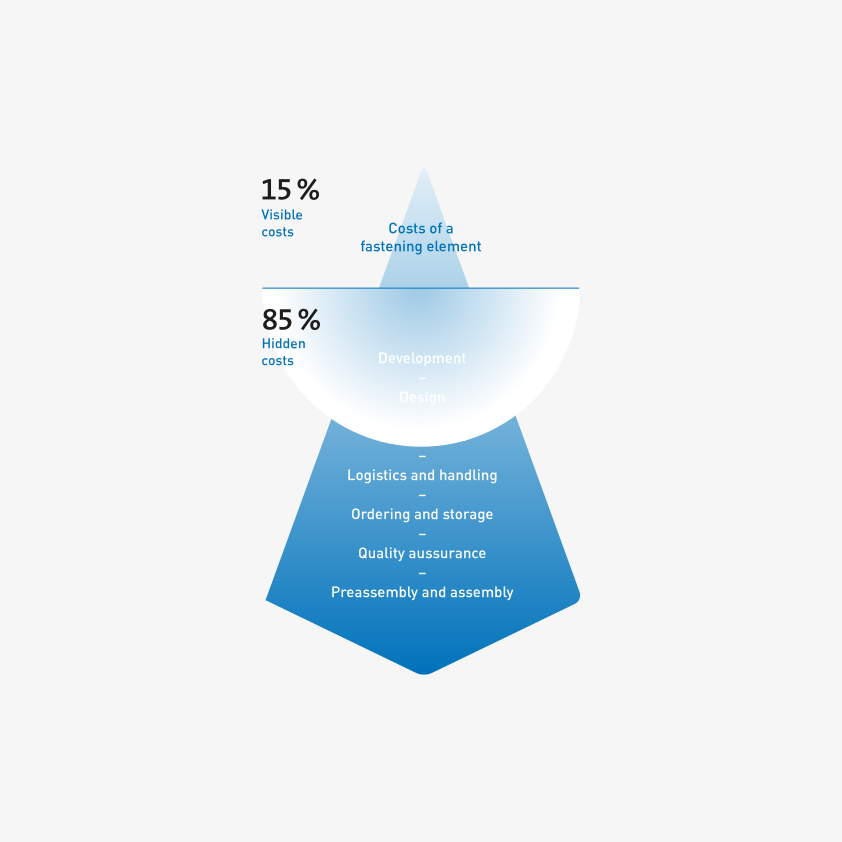
C parts are typical examples of "low spend, high hassle". Less prioritized than core components, they continuously erode corporate profits and competitiveness. Their true costs extend far beyond purchase prices: manpower is consumed at every stage including planning, sourcing, receiving, inspection, warehousing, stocktaking and material issuance. Material shortages may trigger direct losses such as production downtime, expedited freight, overtime pay and customer complaints. Furthermore, tedious inventory management distracts management from supply chain optimization and strategic sourcing.
Pain points: severe inventory overstocking, frequent material shortages, disordered management
Mode 2
Lean Management
Approach: pursue zero inventory and adopt JIT delivery
Mode 2
Pain points: extremely high requirements for supplier response speed, fragile supply chain, and absence of buffer stock
Mode 3
Outsourcing
Approach: entrust management to MRO platforms or suppliers
Mode 3
Pain points: opaque information, inconsistent service quality and difficulty in in-depth collaboration
Evolution: From Manual Operation to Digitalization
Generation 1: Experience-Driven
Reliant on veteran staff’s memory, buyers’ intuition and warehouse operators’ sense of responsibility. Flexible yet fragile — knowledge vanishes once personnel leave.
Generation 2: Process-Driven
ERP, barcode systems and periodic stocktaking are deployed. Operations follow formal rules, yet data remains delayed and workflows cumbersome. Fundamentally, people still adapt to systems.
Generation 3: Data-Driven (IoT + AI)
Sensors capture real-time inventory fluctuations; algorithms forecast demand volatility; automated replenishment is triggered by the system. This marks an innovation in Class C component management: shifting from reactive troubleshooting to proactive prevention, and from manual experience to data intelligence.
Building an in-house system is viable, yet it requires heavy investment, long lead times and strenuous maintenance. For enterprises seeking rapid results, an alternative is to fully outsource Class C materials management to specialized partners while retaining data ownership and process control.
Solution: Intelligent C-Parts Management
The solution for these challenges is to fully outsource c-parts management to a specialized partner while retaining full data ownership and process control.
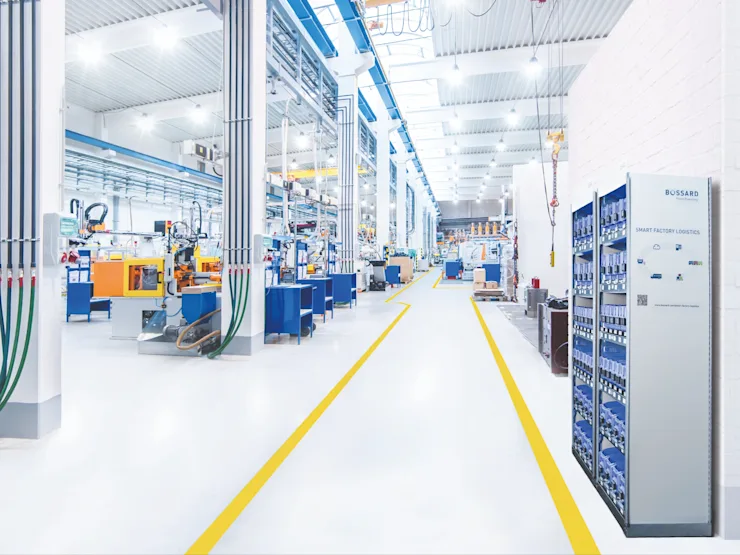
Bossard’s Smart Factory Logistics is a mature intelligent management solution for C-Parts serving global manufacturers, centered on line-side smart inventory systems and Kanban systems.
Architecture: Perception – Decision – Execution
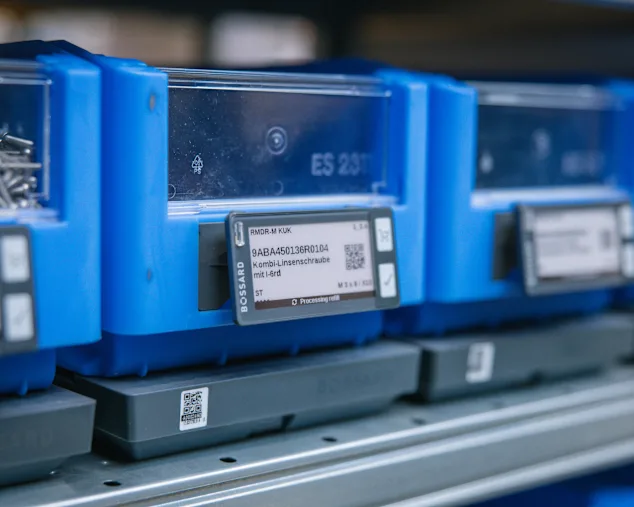
Each SmartBin is equipped with high-precision weight sensors. Inventory levels update instantly when parts are consumed. No scanning or manual data entry is required; consumption and remaining stock are visible at a glance. SmartLabel displays real-time order status and part information, enabling shop-floor operators to use the system without formal training.
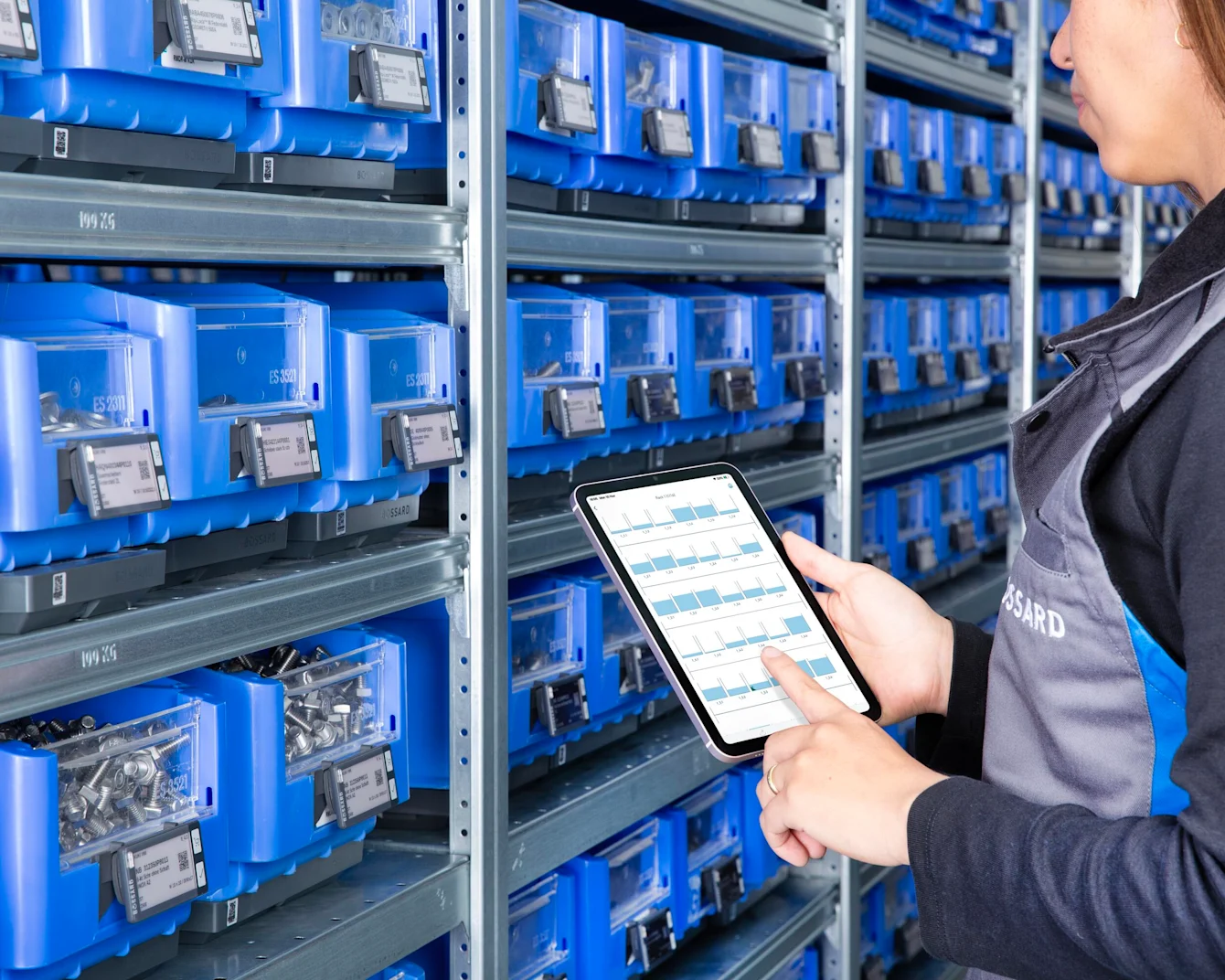
Serving as the “intelligent brain” of Smart Factory Logistics, ARIMS consolidates real-time inventory data. It delivers customized dashboards, visual analytics and reports, and supports seamless ERP integration. Bossard further embeds AI into ARIMS to enable demand forecasting, helping customers cut inventory by up to 20%.
Execution: End-to-End Managed Services
Bossard offers fully managed, end-to-end services covering demand identification, order creation, on-demand delivery and continuous expert optimization. Materials are delivered directly to warehouses, line-side storage or workstations. Companies no longer need to allocate manpower and resources to Class C component management.
Why Kanban Plus Smart Line-Side Inventory?
Cut labor & fix inventory discrepancies
Automatic sensing enables real-time data updates, resolving the pain point of time-consuming stocktaking.
Zero stockout risks
Automated replenishment and AI demand forecasting eliminate stockout-related line downtime.
Reduce inventory
Dynamic safety stock and precise replenishment prevent overstocking.
Data driven
ARIMS delivers real-time visibility; seamless ERP integration prevents data lag.
Cut Total Cost of Ownership
Fully managed services with continuous expert optimization eliminate fragmented management.
Conclusion: Turn the C-Parts Burden into a Growth Driver
The value of intelligent supply chain management often lies in overlooked operational details, most notably c-parts which account for roughly 70% of all item varieties. Targeted smart inventory solutions are not merely optional improvements, but essential measures for manufacturers to boost operational efficiency.
Digital transformation shifts material management from manual control and reactive troubleshooting to intelligent oversight and proactive prevention. This allows manufacturers to dedicate more energy to technological innovation and business growth.
How Do You Optimize Your Production?
Are you interested in optimizing your production as well? Send us a message! We are happy to discuss the possibilities based on your specific needs. Also read about our innovative services and the technical support we offer with our engineering team.