BOM Picking Eliminates Material Pain Points in Flexible Production
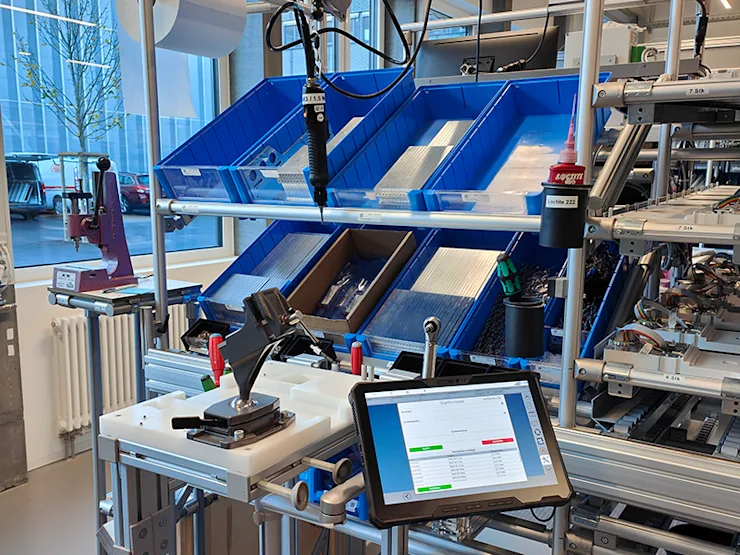
Our BOM Picking solution resolves pain points in kitting processes for low-volume, high-mix assembly lines, enabling an efficient and smart material supply process. Shift from "looking for parts" to "parts being delivered directly to your station".
By Mia Li & Frank Zhou, Smart Factory Experts at Bossard
The Systematic Drawbacks of Conventional Workshops Amid Personalized Manufacturing Trends
Against the backdrop of modern manufacturing, particularly within discrete industries, such as medical devices, precision instruments and high-end equipment, a stark operational contradiction has become increasingly prominent: Market dynamics call for expanded product portfolios, smaller order lots and more frequent production changeovers to satisfy personalized demands and accelerate order fulfillment. In contrast, material distribution workflows still widely adopted in most factories were designed for inventory forecasting and mass production scenarios.
Such operational disconnect has laid bare inherent flaws in traditional logistics models. Above all, inefficient BOM (Bill of Materials) kitting management for low-volume high-mix production severely drags down overall productivity and on-time delivery performance.
Prevalent Operational Scenarios and Root Structural Issues
The fundamental issue stems from conventional, experience-dependent line-side inventory management, which struggles to cope with highly complex and flexible production requirements, creating major bottlenecks in both information flow and physical material handling. A lack of data accuracy and transparency leads not only to inefficiencies; it has become a major barrier hindering flexible production scheduling and seamless shop-floor operations.
Scenario 1
Production Changeover Downtime and Isolated Information Silos
Each product switchover can require significant effort. Material handlers must cross-reference paper checklists to clear obsolete stock and prepare new components amid crowded line-side supermarkets. This inefficiency originates from fragmented information transmission. Critical data embedded in ERP and MES work orders – such as part numbers, batch codes and required quantities – is often printed, circulated and interpreted manually before reaching warehouse operators.
This process leads to data inconsistencies and delays in material delivery. Excessively long changeover lead times are essentially a sign of inflexible response to fluctuating production demands.
Scenario 2
Disordered Picking and High Dependence on Manual Processes
With hundreds of active SKUs (Stock Keeping Units) in circulation, milk runners are required to simultaneously locate storage positions, verify part specifications and confirm picking quantities. Once SKU volumes exceed human short-term memory capacity, picking error rates surge rapidly. This fully exposes the heavy reliance of traditional workflows on individual expertise and memory, leading to lengthy onboarding cycles and rigid efficiency ceilings.
Scenario 3
Cluttered Shop Floors and Risk of Incomplete Kits
To prevent part shortages, excessive materials are forwarded to production lines in advance, resulting in congested working areas and prolonged part searching time. More crucially, decentralized line-side inventory strategies, including weight-based bin restocking, can only ensure sufficient stock of individual items, rather than full material availability for a complete production work order.
Production halts remain inevitable even if certain components are well-stocked while others run short. This reflects the misalignment between material supply logic and production scheduling, a typical limitation of push-based inventory replenishment mechanisms.
The Solution: Optimizing Material Flows with a Work Order-Based Kitting Strategy
To streamline material allocation for low-volume high-mix assembly production, Bossard has established a proven optimization framework based on extensive field practices. Our approach: Phase out inventory-centric consumption replenishment models and adopt order-centric full-set material delivery strategies, thus completing the strategic shift from basic material supervision to integrated kitting fulfillment.
This upgrade covers far more than technological integration; it represents a fundamental overhaul of end-to-end production logistics logic.
Workflow Restructuring: Shift from Decentralized Line-Side Stock to Centralized Kitting Dispatching
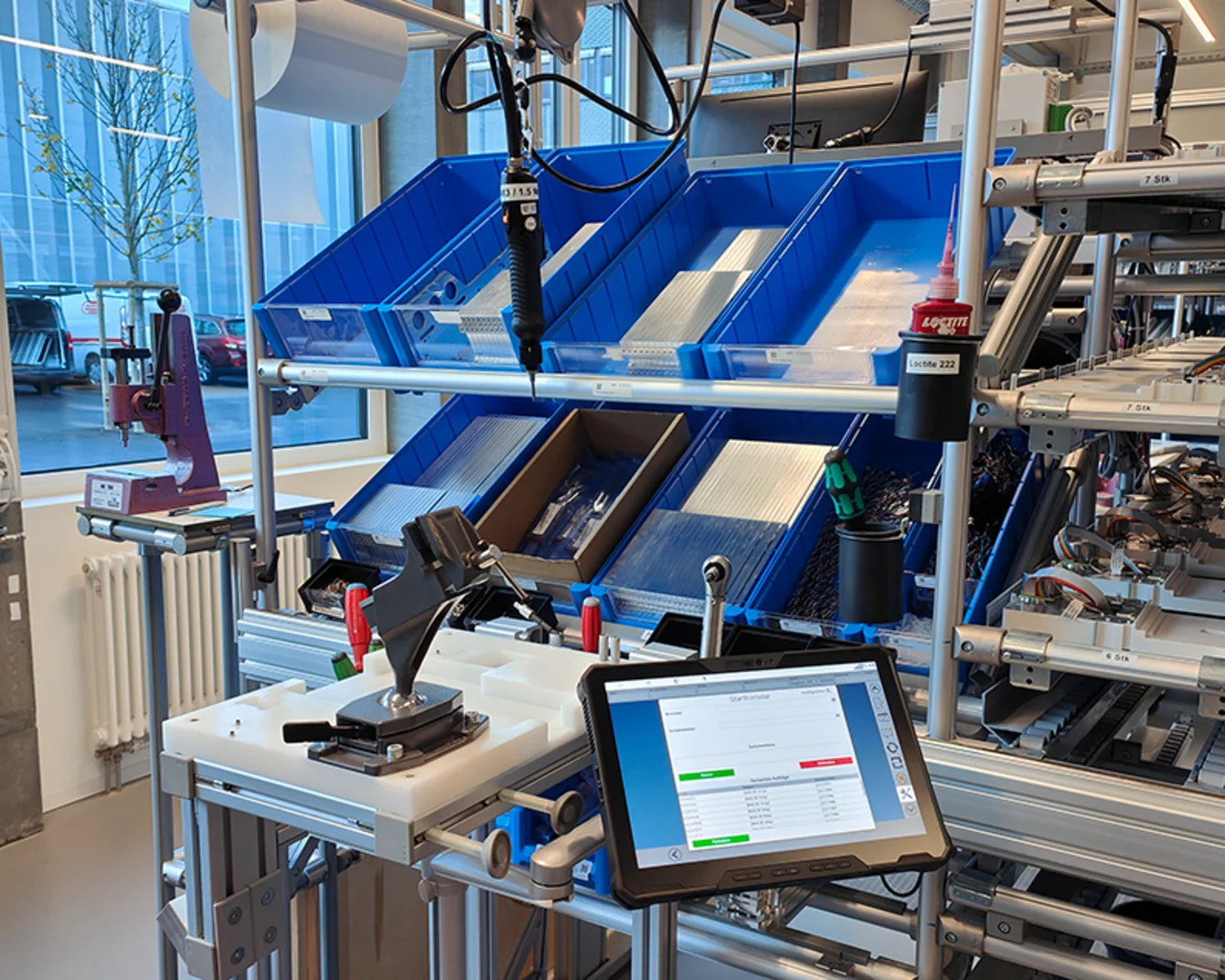
The first pivotal transformation lies in logistics network redesign. Consolidate general components, especially vast assortments of C-parts like fasteners and standard parts, away from assembly lines into dedicated centralized kitting zones. Only fully pre-kitted material kits matching ongoing work orders are retained at workstations.
This practice effectively resolves space constraints and operational inefficiencies on production lines, maximizes usable shop-floor space, and cuts down non-value-added time operators spend on walking and part searching. Meanwhile, the core operational logic evolves from passive consumption-driven restocking to active demand-driven distribution triggered by real-time MES work orders.
Process Optimization: Pick-to-Light Solution for Work Order Execution
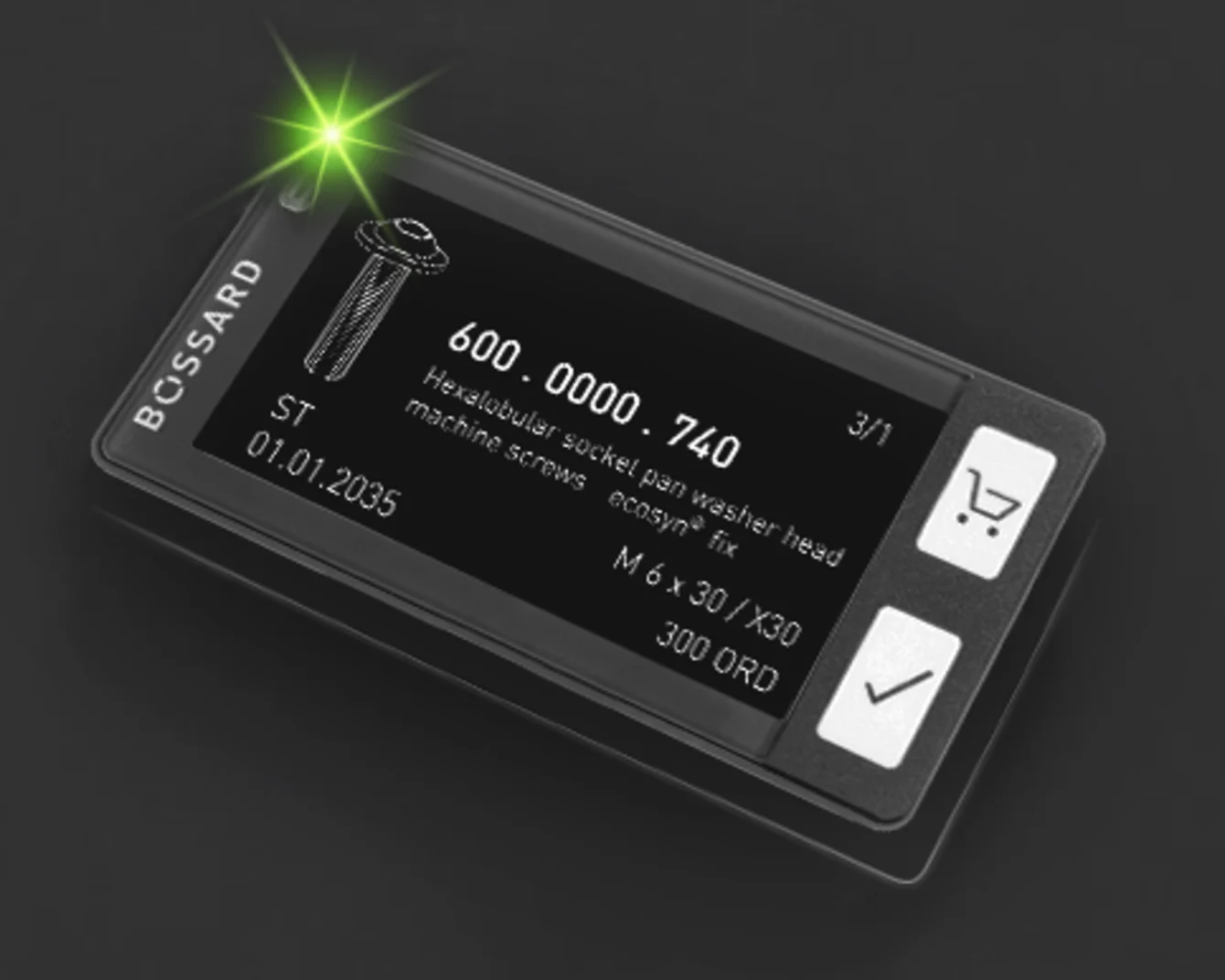
Deployed as the core operational tool within kitting zones, the Pick-to-Light system standardizes all picking activities. Powered by MES scheduling data, it builds a fully closed-loop operation system spanning production plan issuance, on-site execution and operational data feedback.
Chart Note: MES-driven end-to-end work order kitting process. The workflow starts with production schedules released via MES to generate formal work orders, which activate smart picking instructions on designated storage racks. Upon picking completion and line-side distribution, all key operational data is synchronized back to MES for archiving and analysis, forming a complete business circulation loop.
The system optimizes human-machine collaboration across three core dimensions:
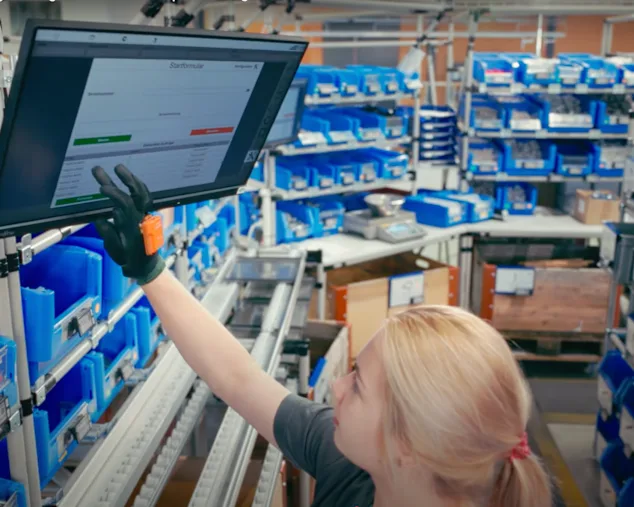
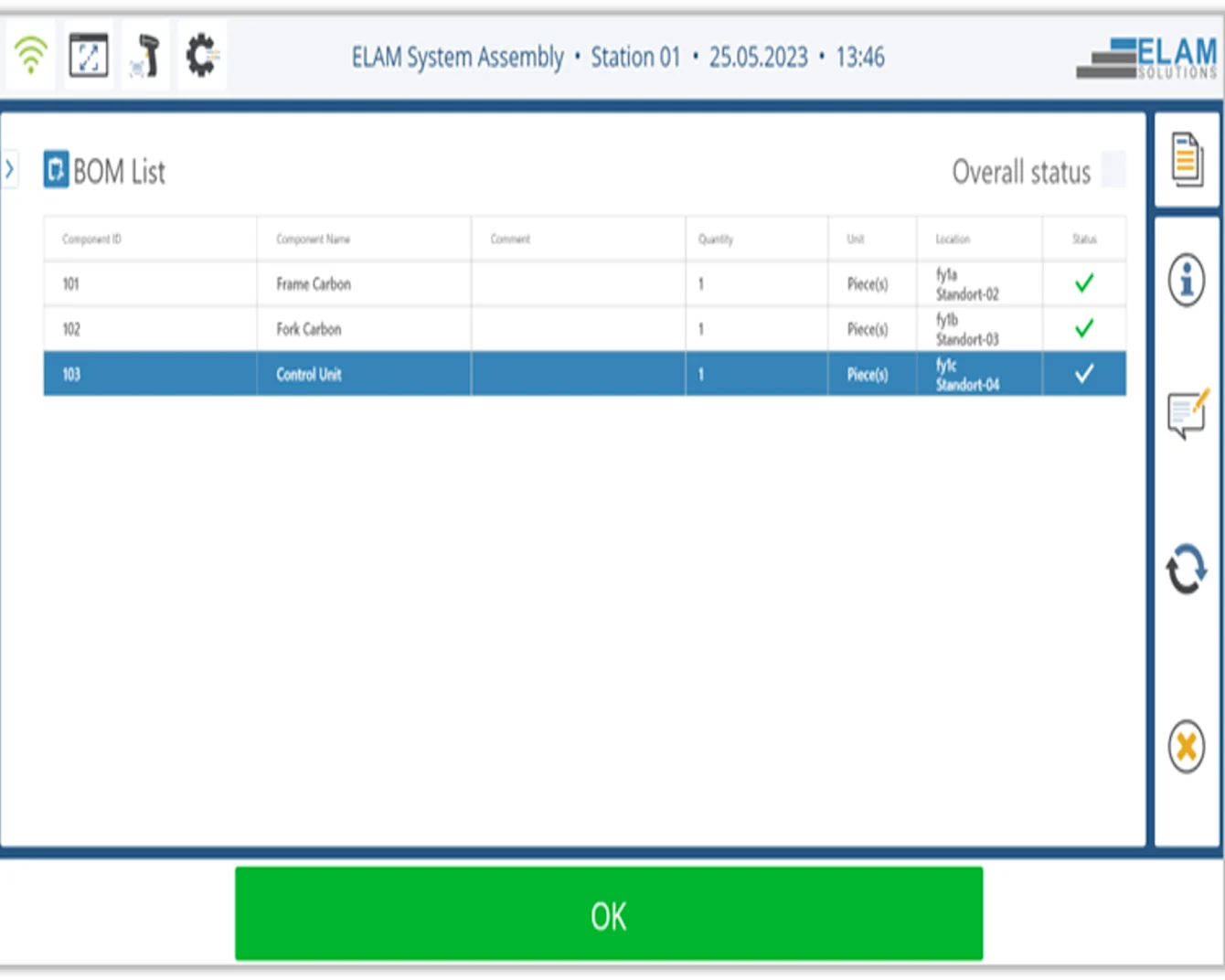
Clear Visual Task Guidance: Operators scan work order barcodes, and the system automatically decomposes detailed BOM requirements, instantly activating LED indicators at corresponding storage locations. Visual light guidance eliminates inaccuracies and delays caused by paper documents and manual recollection.
Simplified Error-Free Operations: Pickers follow straightforward standardized protocols — pick items at illuminated slots and confirm task completion on-site. Combined system guidance and photoelectric double validation convert complex work into streamlined standardized routines, drastically eliminating wrong or missing picks.
Full Data Traceability and Closed-Loop Recording: Every single BOM picking activity is logged in real time within the system, establishing complete data linkage covering materials, work orders, operators and operation timestamps, and laying solid data foundations for full-lifecycle material traceability and production performance analysis.
System Integration: Connect Your Material Flow with Digital Data
Smooth end-to-end workflow execution hinges on seamless integration between Pick-to-Light devices and enterprise management systems including ERP, MES and WMS. Once production schedules are finalized, demand data is automatically converted into precise picking tasks at kitting stations, ensuring full-set materials are delivered to assembly lines strictly in line with production beats. This connects the full digital chain from top-level planning to on-site execution, achieving perfect synchronization between material provision and actual production progress.
A data-driven smart logistics setup is the foundation of an efficient smart factory. Leveraging this foundation, SmartLabel Cloud solutions deliver real-time visualized operational dashboards; Pick-to-Light systems guarantee high-precision error-free kitting picking; SmartTower supports space-saving weight-verified intelligent picking.
All functional modules achieve seamless interoperability with the ELAM Solutions platform to ensure full-process traceability throughout planning and field execution.
Powered by robust industrial IoT and mature integration, Bossard smart assembly solutions connect seamlessly with ERP, MES, WMS, and picking systems for stable, accurate, and efficient data flow.
Outcomes: Build Precise, Efficient and Highly Adaptive Material Distribution Capabilities
Enterprises adopting centralized kitting management integrated with work order-driven Pick-to-Light systems can achieve comprehensive performance upgrades in material supply management:
Boosted Productivity and Optimized Space Utilization: Standard picking cycle times are reduced by 30% to 50%, with significant improvement in workshop space utilization. Complete material kitting readiness is fully secured, drastically cutting production downtime caused by part shortages and shortening overall production changeover durations.
Improved Operational Accuracy and Product Quality: Picking error rates are reduced from the conventional 1%-3% to below 0.1%, pushing material delivery accuracy close to 100% and establishing solid material assurance for high-standard manufacturing output.
Increased Production Flexibility and Operational Resilience: Dependence on senior milk runners is greatly minimized. New recruits can get fully proficient in BOM picking workflows after training, enabling enterprises to swiftly respond to fluctuating order demands and frequent product iterations. Production flexibility is thus anchored in standardized systems and streamlined processes, rather than individual staff experience.
Summary
In the new manufacturing era defined by high product diversity and small production batches, success depends on rapid response capability and reliable delivery accuracy across the entire value stream. The combined adoption of standardized kitting modes and work order-based Pick-to-Light picking systems offers a pragmatic and highly effective solution to prevailing industry pain points.
It shifts the core focus of material management from static warehouse inventory status to dynamic on-site production demands. By governing physical material flows driven by real-time data, enterprises are able to deliver right types, correct quantities and qualified components to designated workstations at the exact required time.
This goes beyond logistics optimization; it marks a critical stride toward lean, flexible and digital and intelligent manufacturing, helping enterprises build sustainable core delivery competitiveness independent of veteran operational staff.
Get the Best Software for Your Production
Make your data visible and transform your assembly based on real insights. We support you with the right digital solutions for your production environment.